
630-717-7801

What Must Landlords Prove in Court to Obtain an Eviction Order in Illinois?
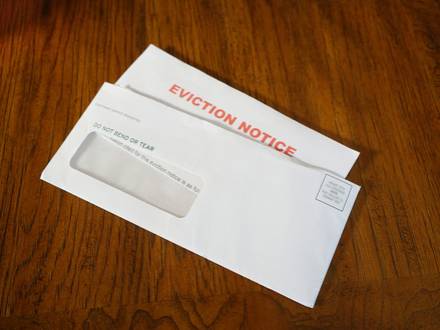 Eviction cases often feel straightforward from the outside, but Illinois law requires landlords to meet specific legal standards before a judge can order a tenant to move out. In 2025, data from the Eviction Lab at Princeton University showed that millions of eviction cases are filed across 10 states each year, including tens of thousands in Illinois courts.
As of 2026, Illinois courts still require landlords to follow strict procedures and prove each legal element of their case. If you are involved in an eviction matter, a Naperville, IL landlord eviction lawyer can help explain what the court will look for and whether those requirements have truly been met.
What Does a Landlord Have To Prove To Evict a Tenant in Illinois?
To obtain an eviction order, a landlord must show the court that there is a valid legal reason for eviction and that all required steps were followed. Judges do not grant eviction orders simply because a landlord wants possession of the property.
The landlord carries the burden of proof. If any required element is missing, the court may dismiss or delay the case.
Does a Landlord Have to Prove There Is a Lease To Evict?
A landlord must prove that a legal landlord-tenant relationship exists. This is usually done by presenting a written lease or evidence of a month-to-month rental agreement.
The court will look at who signed the lease and assess the rental terms. They have to determine whether the tenant still had a legal right to occupy the property at the time the eviction was filed.
Does the Landlord Have To Show a Legal Reason for Eviction in Illinois?
Illinois law does not allow landlords to evict a tenant without a valid legal reason. The court will not issue an eviction order unless the landlord proves that a lawful ground for eviction exists.
Common legal reasons for eviction in Illinois include:
-
Failure to pay rent on time
-
Violating the terms of the lease, such as having unauthorized occupants or pets
-
Causing damage to the rental property
-
Engaging in illegal activity on the premises
-
Staying in the unit after the lease ends or after proper notice is given
Under the Illinois Forcible Entry and Detainer Act, 735 ILCS 5/9-101, landlords must show that lawful grounds for eviction apply. Without a valid legal reason, the eviction case cannot move forward in court.
What Role Does Proper Notice Play in an Illinois Eviction Case?
Proper notice is a critical part of any eviction case. The landlord must prove that the correct notice was served and that it complied with Illinois law.
Examples include a five-day notice for unpaid rent or a 10-day notice for lease violations. Courts often dismiss cases when notices are missing, served incorrectly, or contain errors.
What Evidence Does a Judge Review in an Eviction Hearing in Illinois?
Judges rely on documents and testimony to decide eviction cases. Evidence often includes:
-
The lease or rental agreement
-
Proof of notice and service
-
Payment records or account ledgers
-
Written communications between the parties
Under 735 ILCS 5/9-104, courts have the authority to evaluate possession rights based on the evidence presented.
Can Tenant Defenses Prevent an Eviction Order in Illinois?
Tenants may raise defenses that challenge whether the landlord met all legal requirements. These can include improper notice, payment disputes, or conditions that made the unit unlivable.
If a defense is supported by evidence, the court may deny the eviction or require the landlord to correct the issue before proceeding. An attorney can help you identify valid defenses and gather the evidence needed to support them. They can also present those arguments clearly to the court so your rights are fully considered before any eviction order is issued.
Schedule a Free Consultation With Our DuPage County, IL Landlord Evictions Attorney
Eviction cases often involve more than paperwork. They involve people, behavior, and high-stress situations on both sides. Appelman Law LLC brings a unique perspective to these cases. Attorney Appelman holds an M.A. in Forensic Psychology. He understands the connection between criminal defense law and behavioral health. This background provides valuable insight into mental health-related issues that can arise in housing disputes and court proceedings.
If you are dealing with an eviction matter, contact our Naperville, IL landlord evictions lawyer. Call 630-717-7801 to schedule your free consultation and learn how Illinois eviction law applies to your situation.


From our office in Naperville, Illinois, we serve clients throughout DuPage County, Kane County, Kendall County, Cook County, and Will County, including Wheaton, Aurora, Downers Grove, Lisle, Aurora, Elgin, St. Charles, Geneva, Batavia, Yorkville, Ottawa, and Plainfield.
Results listed are not a guarantee or indication of future case results.
1560 Wall Street, Suite 304, Naperville, IL 60563
630-717-7801