
630-717-7801

How To Defend Against a Prescription Drug DUI Charge in Illinois
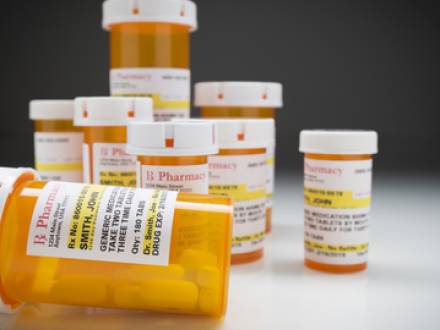 You can defend against a prescription drug DUI charge in Illinois in many ways. For example, you might challenge whether the medication actually impaired your ability to drive or question the accuracy of drug testing. If you're facing this kind of charge in 2026, our DuPage County criminal defense lawyers can help you understand the evidence against you and build a strong defense.
Can You Get a DUI for Taking Prescribed Medication in Illinois?
Under 625 ILCS 5/11-501, Illinois law makes it illegal to drive under the influence of any drug to a degree that renders you incapable of safely driving. This includes legally prescribed medications. Having a valid prescription doesn't automatically protect you from a DUI charge if police believe the medication affected your driving.
Common prescription medications that can lead to a DUI charge include opioid painkillers, benzodiazepines like Xanax or Valium, sleep aids, and certain muscle relaxants. Even medications that come with a warning label about drowsiness or impaired coordination can become the basis for a DUI arrest if an officer believes you were impaired.
Using the Prescription in Your Defense
Having a valid prescription can be an important part of your defense. But it isn't a complete shield against charges. The law focuses on whether the medication impaired your ability to drive safely at the time. It doesn't focus on whether you were legally allowed to take it. This is why many prescription DUI cases come down to disputing whether real impairment existed.
How Do Police Test for Prescription Drug Impairment in Illinois?
Unlike alcohol, there's no simple breath test that measures prescription drug levels in your system. Instead, police often rely on field sobriety tests and officer observations. In some cases, they also use a drug recognition expert (DRE) who's trained to identify signs of impairment from specific categories of drugs.
Blood or urine tests may also be used to detect the presence of a substance. These tests often only show that a drug is in your system, though. They don't necessarily show how much impairment it caused at the time you were driving. This distinction is one of the most important issues a defense attorney can raise in these cases.
Why Is Impairment Harder to Prove With Prescription Drugs Than Alcohol?
With alcohol, impairment tends to correlate closely with blood alcohol levels. Prescription drugs are different. They affect each person differently based on tolerance, dosage, and how long they've been taking the medication. A level of medication that would impair one person might have little to no effect on someone who takes it regularly as prescribed. This makes proving actual impairment far more complicated for the prosecution than in a typical alcohol related DUI case.
What Other Defenses Are Available in a Prescription Drug DUI Case?
Several defense strategies can be used depending on the specific facts of your case. Common defenses include:
- Challenging whether the field sobriety tests were properly administered
- Questioning the qualifications of the officer who claimed to observe impairment
- Showing that you took the medication exactly as prescribed by your doctor
- Arguing that blood or urine test results don't establish impairment at the time of driving
- Presenting medical testimony about your tolerance and how the medication typically affects you
A strong defense often relies on breaking down the gap between the presence of a drug in your system and actual impairment behind the wheel.
Can a Drug Recognition Expert's Testimony Be Challenged in Court?
Drug recognition experts undergo specialized training. But their evaluations aren't infallible. Defense attorneys can challenge whether the officer followed proper protocols during the evaluation. They can also question whether their conclusions were based on solid evidence. Maybe other explanations exist for the behaviors the officer observed.
Fatigue, medical conditions, and even nervousness during a traffic stop can sometimes mimic signs that an officer might otherwise attribute to drug impairment.
Call Our Naperville, IL DUI Defense Attorney to Schedule Your Free Consultation
Attorney Appelman holds a Master's Degree in Forensic Psychology, giving him a unique understanding of how impairment is evaluated and challenged in court. A charge like this can significantly impact your life. You need an experienced, knowledgeable attorney who will fight to protect your rights.
Contact Appelman Law LLC at 630-717-7801 to talk to our DuPage County criminal defense lawyers today.


From our office in Naperville, Illinois, we serve clients throughout DuPage County, Kane County, Kendall County, Cook County, and Will County, including Wheaton, Aurora, Downers Grove, Lisle, Aurora, Elgin, St. Charles, Geneva, Batavia, Yorkville, Ottawa, and Plainfield.
Results listed are not a guarantee or indication of future case results.
1560 Wall Street, Suite 304, Naperville, IL 60563
630-717-7801